
Conversation with Beñat Labaien at The Game Changer Community

Football evolves every day. New ideas, new player profiles, and a constant need to adapt force the coach to stay one step ahead. In this conversation, Beñat Labaien analyses where the modern game is heading: fewer rigid structures, more interpretation of space, more dynamism… and greater demands in every detail.
THE GAME CHANGER: On our platform, we’ve been sharing a lot of content around game trends. Over the last few years, we’ve seen the influence of De Zerbi in build-up play with that 4-2-2-2, with many teams dropping two midfielders almost into their own box and combining short to overload that area or fill the build-up phase. But now more and more teams are doing the opposite: they look to empty that first phase and fix players on the last line. I wanted to ask you about that.
BEÑAT LABAIEN: In the end, it’s evolution, right? The game is evolving and will keep evolving. Every day there are new ideas, people with brilliant minds rethinking things… even De Zerbi himself. What he did in England is not the same as what he has done this year in Marseille, where he respected his structure but also attacked space much more… maybe more than just playing to feet. Coaches are forced to evolve because if you stop, you lose the ability to move forward. As we said before, you need to have your ideas, but also anticipate what your opponents are going to do and look for solutions in advance.
TGC: It’s often said that football always goes back to what it was years ago, but I also feel that football is evolving a lot and is very different from before. Players have improved physically, and we’re in an era of so much information… there’s much more information, so everything improves. I don’t know if football is really cyclical as many people say.
BL: It can be cyclical in terms of ideas and structures, there are trends, but I think it’s evolving towards new things. I believe systems are no longer as important as they used to be — we’ve moved from systems to spaces. It doesn’t matter what system you start with. You begin with a structure, but then the spaces are what matter. For example, with PSG, I don’t really know how they play, because they have five fixed players and then… five players you don’t know where they are. So the game is constantly evolving and will continue to evolve. I don’t know exactly where it’s going, but I do believe systems will lose importance and what we will prioritise are spaces.
“Systems will become less important. What we will prioritise are spaces.”
TGC: I find PSG especially interesting because when they won the Champions League, many analysts said they did it without a “6” — a player like Rodri or Busquets, someone who can control midfield and win duels. It was considered difficult to win the Champions League without that, and even more without a classic “9”. But they did it without either. It changes the perspective when everyone is looking for that type of 6 or a classic 9… and you start thinking maybe you don’t need such a dominant duelling 6.
BL: Exactly. PSG players like Vitinha can appear as a centre-back or as a full-back, Fabián can appear as a striker or as a full-back. That rotation and occupation of free spaces is very difficult to analyse. And many times, as you said about analysts, they analyse things that even the coaches themselves didn’t prepare. That’s why sometimes we overcomplicate things. But yes, football is evolving and will continue to evolve a lot. I’m not sure whether it’s cyclical or not, but there are trends in structures. Successful teams can implement systems with three centre-backs or different shapes, but systems will become less important and other aspects of the game will gain importance.
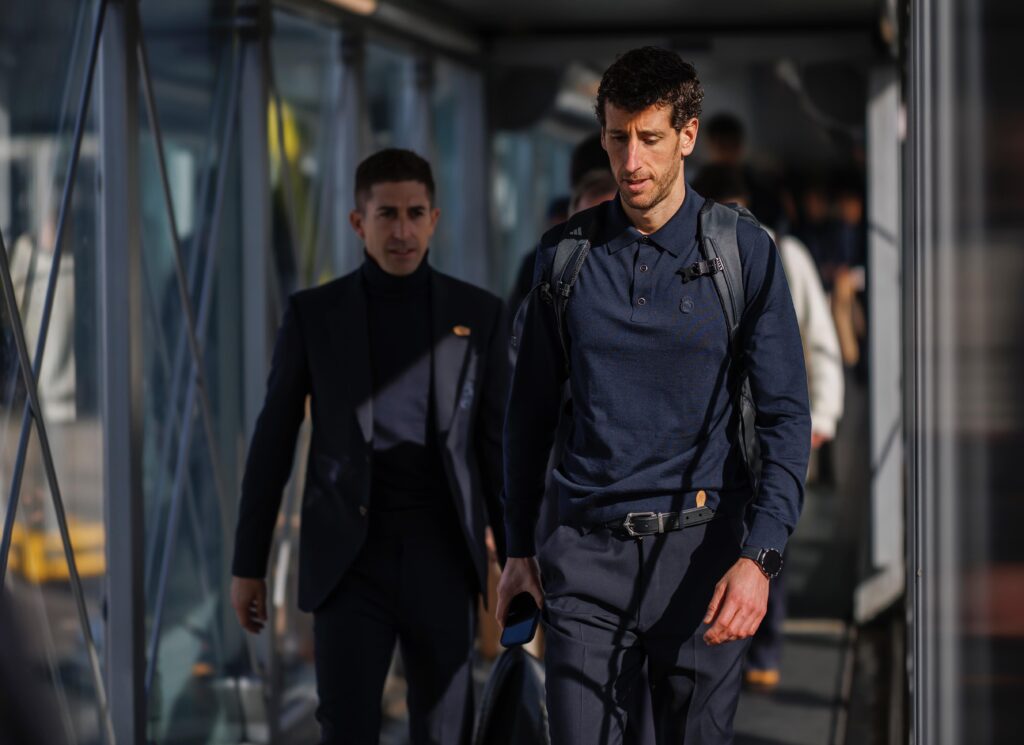
TGC: Yes, and I also remember Rubén de la Barrera saying that context is key — the players PSG have allow them to do that. If you try to replicate PSG with your team, you might end up creating problems.
BL: Exactly. In the end, your players show you the way. If you’re too obsessed with imposing your ideas, you’re shooting yourself in the foot. You need to find the balance between what you have and what you want.
TGC: I have a few questions about your personal preferences. Do you prefer zonal defending, man-to-man, or a hybrid? I’ve evolved myself — at the beginning I was influenced by Marcelo Bielsa, but now I see it more from a zonal perspective. Nowadays, with limited training time, many teams go man-to-man in restarts, but not in all situations…
BL: It depends on the type of players you have. For example, in Japan I started with man-to-man in high pressing, but we weren’t winning duels at the back, so I had to adapt and press with one less player up front. Personally, I don’t like chasing all over the pitch, but there are specific situations where, in a game plan, you can use those types of marking strategies depending on what you have and what the opponent does. As I said before, you have to adapt to the moment, the context, your players and your opponent, and design what you want to do on the pitch. But generally, I don’t like chasing. I don’t feel comfortable chasing all over the field. Beyond that, I do like going man-for-man in the opponent’s half, but full-pitch tracking is not something I believe in.
TGC: I wanted to ask about when teams drop into a low block and defend with five on the last line. We saw it, for example, with Xabi Alonso at Leverkusen, where Frimpong played a key role — a player who could act as a winger but also drop back and defend in a back five. Some coaches never fully drop into a back five and stay with four, being more proactive. But when you go with five at the back, it can also become more passive, right?
BL: Generally, I don’t like dropping wingers into the defensive line. I prefer to bring a midfielder in between centre-backs, for example, but again it depends on the players. At Real Sociedad, I remember using Mikel Oyarzabal once to block the connection between Messi and Jordi Alba. But personally, I don’t like wingers dropping deep, because as you said, it makes you more passive. When you recover the ball, it becomes harder to attack. But again, it depends on the type of player. It’s not the same having someone like Frimpong or Fede Valverde, who can take you into the opponent’s half in two seconds, as having a different type of player. Emery often drops five or six players and uses wingers in that line. In the end, every coach must do what they feel is best to win the game. You need to have your ideas, but generally, I don’t like dropping wingers deep.
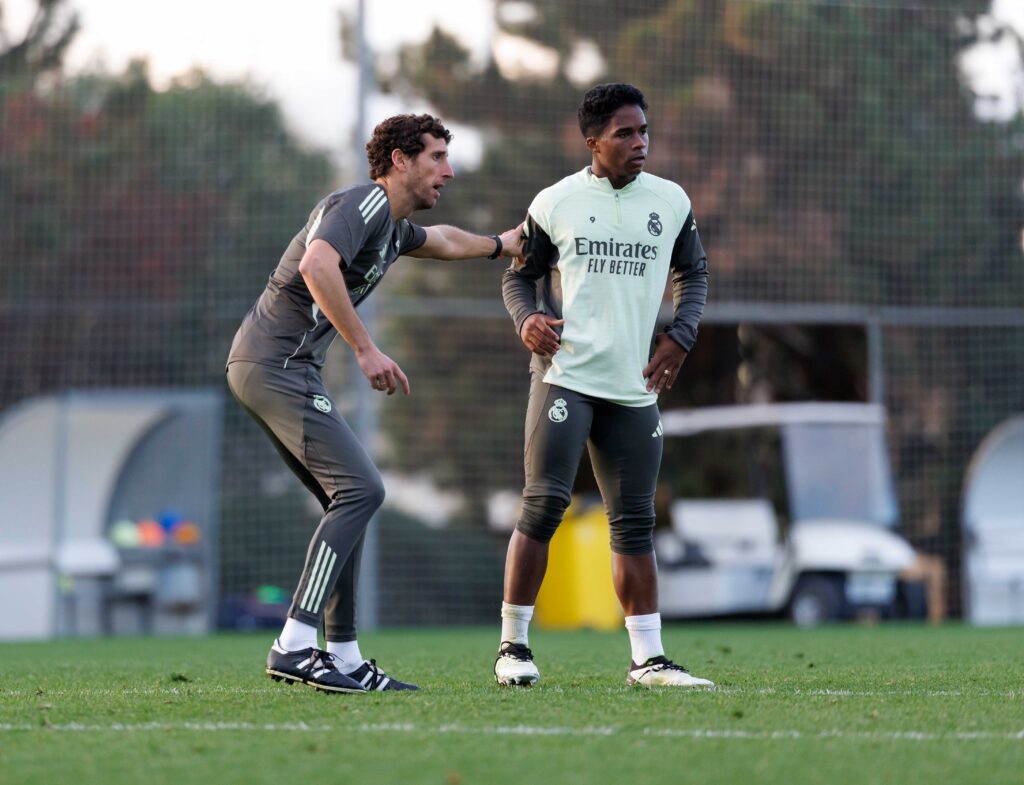
TGC: Yes, especially considering transitions. Also, when midfielders drop too much, it can leave space in midfield. Teams like Aston Villa even drop a forward sometimes. It’s a very interesting and trending topic.
BL: Teams now attack the last line with five or six players, so you need to decide your priorities. Every team is different, every moment is different. What I’m saying now, in three months I might say the opposite, because it depends on the squad profile you have.
TCH: This is very interesting and links to the next question. Modern football seems to be heading towards teams attacking with five or six on the last line, but opponents adapt, games become tight, chances are limited, and set pieces become key.
BL: Yes, everything is so analysed now that set pieces open games. The margins are so small, the differences between teams are minimal. Set pieces are very important. They always were, but now even more. Top-level teams are more equal than before. Except maybe Bayern Munich in Germany, most leagues are very balanced. You can go to any stadium and if you’re not ready, it doesn’t matter if it’s the 5th or the 17th team. You have to be prepared in every aspect. That’s why I think football is evolving towards the micro: individual detail, specific situations… because everything else is already highly developed.
“Football is evolving towards the micro: individual detail, set pieces and specific situations.”
TGC: I think one of the evolutions is exactly that — individual quality and set pieces. Guardiola also mentioned that modern wingers are more physical profiles like Semenyo, with more power and transition capacity. We see that in teams like Arsenal too. But at the same time, we’re seeing teams that combine well in tight spaces. Do you think that style could reach the elite?
BL: It could. With how equal football is now, physical performance has become extremely important — players are athletes. But within that, the skilful, creative player can reappear, to create chaos within that order. Top players are technically very strong, but that type of player who creates imbalance will always have a place, especially in a game that is becoming so structured.
TGC: The key seems to be disorganising the opponent without losing your own structure.
BL: Exactly. You need to maintain order in certain players, but the game is moving towards something closer to futsal — pass and move, pass and cut, especially in the final third.
“Football is moving towards something closer to futsal: passing, moving and constantly creating space.”
TGC: We can learn a lot from other sports — basketball, handball, futsal — especially to attack low blocks.
BL: Absolutely. Manchester City is a great example — most situations are pass and move, full-backs coming inside and attacking spaces. Then it’s about how you reorganise and prepare for loss. That’s where the game is heading.
TGC: Build-up is also evolving — more players involved, arriving from deeper positions.
BL: Exactly. It’s evolution. Every day new ideas appear. If teams empty the build-up phase, the next step might be pressing with one more player and leaving one less behind. And then something new will come. That’s football — constant evolution.
Watch the full interview: